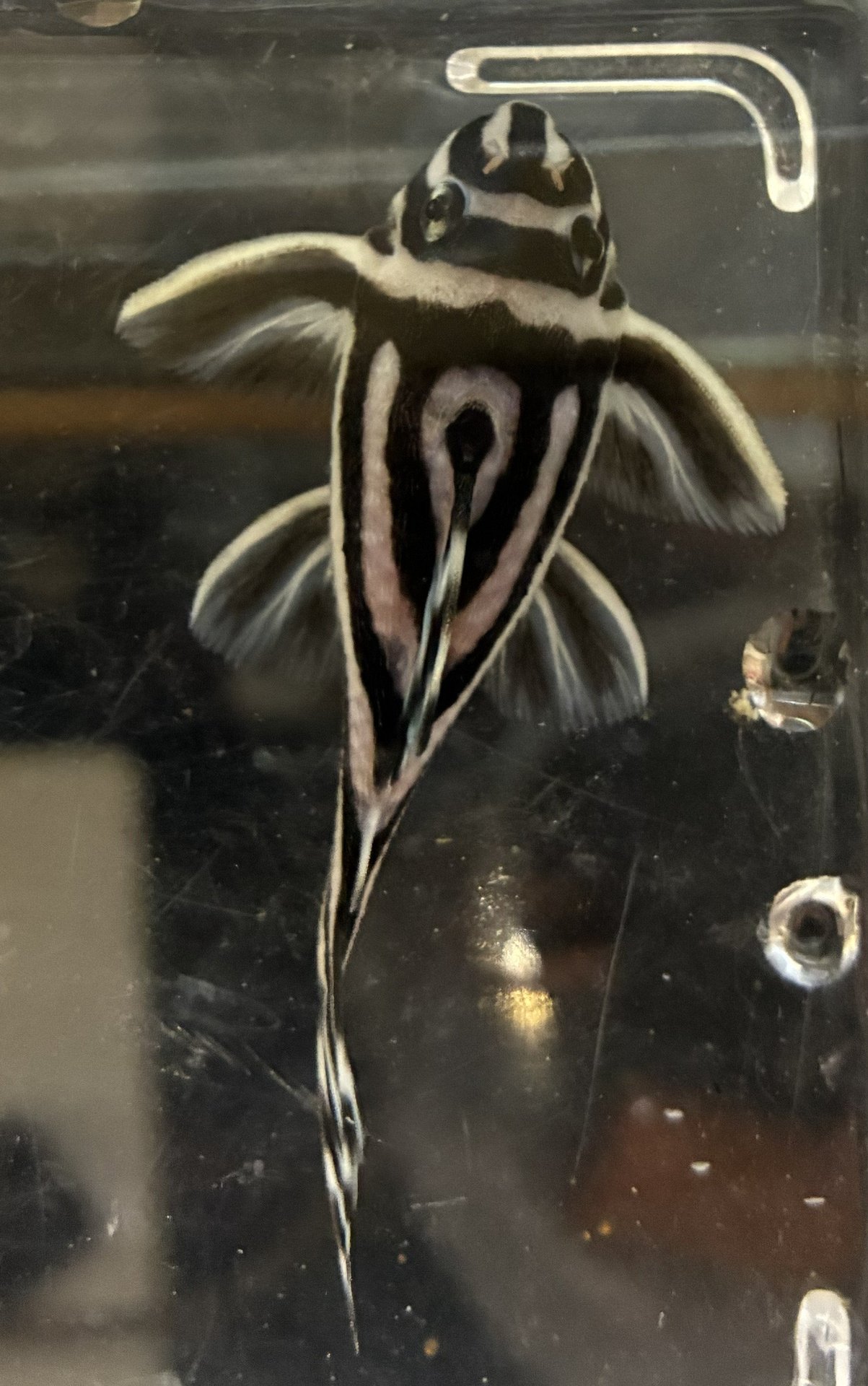
- What is the Imperial Zebra Pleco: The Ultimate Beauty Woven by Black and White Art
- The Mystery of Their Origin and Current Conservation Status
- Physical Characteristics: The Ultimate Beauty Woven by Perfect Stripes
- My Tank’s Impes: What Daily Observation Teaches Me
- Welcoming Imperial Zebra Plecos: The Right Rearing Environment
- The Challenge of Breeding: The Mysterious Act of Continuing Life
- Acquiring Imperial Zebra Plecos: Price and Difficulty
- To You Who Wish to Keep Imperial Zebra Plecos: Resolve and Passion
- Summary: The Aquarist’s Path with Imperial Zebra Plecos
What is the Imperial Zebra Pleco: The Ultimate Beauty Woven by Black and White Art

In the world of aquariums, countless beautiful creatures exist, but among them, one stands out remarkably, captivating many pleco enthusiasts: the Imperial Zebra Pleco, affectionately known as “Impe.” The shock of seeing its form for the first time is still vivid in my memory. Its perfect pattern, like a work of art, is woven from vibrant black and white stripes. They are not just ornamental fish; they are truly “living jewels.”
The Secret of Scientific Names and L-Numbers
The official scientific name for the Imperial Zebra Pleco is “Hypancistrus zebra.” In the pleco world, it is widely recognized by its L-number, “L046.” An L-number is a provisional designation given by the German pleco magazine “DATZ” to undescribed species (those without a formal scientific name), with numbers assigned in the order of their discovery. The number L046 tells us how quickly the Imperial Zebra Pleco gained attention and recognition among pleco enthusiasts. This scientific name and L-number are deeply etched in the hearts of hobbyists, symbolizing their rarity and unique beauty.
The Mystery of Their Origin and Current Conservation Status

The homeland of the Imperial Zebra Pleco is one of the most biodiverse regions on Earth: the Amazon River basin in Brazil. Specifically, their native habitat is a limited area in the middle reaches of the mighty Xingu River, particularly around Altamira. The Xingu River is known for its unique ecosystem and many endemic species, and the Imperial Zebra Pleco is no exception. They live quietly in nature, hiding in crevices and caves among the rocks where clear water flows.
Protection Under CITES Appendix III
Unfortunately, due to their beautiful appearance and rarity, Imperial Zebra Plecos have been subjected to overfishing. Furthermore, large-scale development, such as dam construction, is progressing in their native Xingu River, threatening their habitat. In response to this situation, to regulate international trade and conserve the species, the Imperial Zebra Pleco is listed in “CITES Appendix III.” This is a result of the Brazilian government’s request to the international community for the protection of the Imperial Zebra Pleco, an endemic species to their country, and strict procedures are required for import and export. As hobbyists, we must deeply understand this fact and always remember that they are precious life forms on Earth. It is our responsibility to care for protected individuals with utmost dedication.
Physical Characteristics: The Ultimate Beauty Woven by Perfect Stripes

One glance at an Imperial Zebra Pleco, and anyone will be captivated by its perfect aesthetic beauty. Their appearance is truly a work of art created by nature, embodying the ultimate beauty in the aquarium hobby.
The Allure of Black and White Stripes
Their greatest charm, as their name suggests, is the vibrant and well-balanced black and white stripe pattern that covers their entire body. While there may be slight differences in the thickness and arrangement of these stripes among individuals, they are generally regular and never cease to fascinate observers. Especially when they are young, their contrast is striking, making them particularly eye-catching in the aquarium. This pattern is also said to serve as camouflage, allowing them to blend into the surrounding light and shadow when hiding in rock crevices, thus protecting themselves from predators. However, for us hobbyists, we are simply captivated by their beauty.
Suction Mouth and Streamlined Body Shape
A common characteristic among plecos is their powerful suction-cup mouth, which allows them to firmly adhere to rocks and driftwood. The Imperial Zebra Pleco is no exception, and this suction mouth is a remnant of their ability to cling to rocks in the strong currents of the Xingu River. Their body shape is somewhat flattened and highly streamlined, perfectly suited for quickly moving through rock crevices. They reach a maximum length of about 10 cm, placing them in the smaller category among plecos, yet the presence they exude in their small bodies is no less impressive than that of larger plecos. This compact size is also one of the reasons they are supported by many enthusiasts.
My Tank’s Impes: What Daily Observation Teaches Me

The Imperial Zebra Plecos I welcomed into my tank are truly silent kings. Just having them in the aquarium makes the entire space feel enveloped in a special atmosphere. Observing their daily lives is the ultimate therapy for me, providing endless joy.
The Daily Life of a Silent King
My Impes usually hide deep within the shelters made of driftwood and rocks in the tank. Being very shy, they quickly disappear into their hiding spots if someone approaches the aquarium. However, when the tank lights go out and the surroundings become quiet at night, they slowly emerge from their shelters and begin to explore the tank. Their appearance is like shadows dancing in the twilight, almost mystical. Occasionally, they might encounter other plecos, but they generally avoid conflict, seemingly maintaining their distance from each other. It is this reserved demeanor that, I feel, further accentuates their inherent nobility.
Their Individuality and Charm
Even among Imperial Zebra Plecos, I’ve noticed subtle differences in personality from one individual to another. Some Impes are extremely wary and rarely show themselves, while others adapt to their environment relatively quickly and may even peek out from their shelter entrance at feeding time. Especially when I introduce frozen bloodworms or pleco tablets, they all emerge from their shelters simultaneously and feed with single-minded devotion. Their powerful suction mouth movements and serious gaze as they concentrate on eating never cease to fascinate me, no matter how many times I see them. Every time I see them living healthily and freely in the tank, I am filled with an unparalleled sense of happiness. Their presence is an irreplaceable treasure in my aquarium life.
Welcoming Imperial Zebra Plecos: The Right Rearing Environment

To keep Imperial Zebra Plecos healthy, it is crucial to replicate their native habitat as closely as possible. They are very delicate fish, requiring meticulous attention to detail.
Water Quality and Temperature: Recreating Their Homeland
Imperial Zebra Plecos prefer clear, neutral to slightly alkaline water. Specifically, maintaining a pH range of 7.0 to 7.5 is ideal. They are very sensitive to sudden changes in water quality, so it is essential to perform frequent small water changes or establish a robust filtration system to stabilize water parameters. Additionally, the water temperature should be set somewhat high, between 26-30°C (79-86°F). Considering their native Xingu River environment, this temperature range is likely the most comfortable for them. A heater must be installed to minimize temperature fluctuations.
Hiding Spots are Essential: The Importance of Secure Shelters
Given their very shy nature, it is crucial to provide multiple hiding spots or shelters in the aquarium. Clay pipes, driftwood, or caves formed by arranging rocks are suitable. They particularly prefer hiding spots that allow them to fit snugly. A lack of hiding places can not only lead to stress and poor health but also potentially cause conflicts with other fish. When designing your tank layout, prioritizing secure places for them to feel safe is key to successful keeping.
Stronger Carnivorous Tendencies: Particular About Food
Among many omnivorous plecos, Imperial Zebra Plecos are considered to have relatively stronger carnivorous tendencies. In nature, they are believed to prey on aquatic insect larvae and small crustaceans. In the aquarium, it is best to feed them animal-based foods such as frozen bloodworms and brine shrimp as their staple diet. Additionally, pleco-specific tablets or sinking foods with plant matter can be given as supplements to ensure a balanced diet. Be careful not to overfeed, as this can lead to water quality degradation; it is generally recommended to feed them at night, providing only the amount they can consume. While it is a joy to see them eat heartily, excessive feeding should be avoided.
The Challenge of Breeding: The Mysterious Act of Continuing Life

Breeding Imperial Zebra Plecos is one of the ultimate goals for aquarists, a challenge many enthusiasts continue to pursue. Witnessing this mysterious act brings immense emotion and a sense of accomplishment to the keeper.
Cave Spawning and the Devoted Male
As their name implies, Imperial Zebra Plecos are “cave spawners,” laying their eggs in enclosed spaces such as caves or clay pipes. When attempting to breed them, it is crucial to provide multiple spawning tubes (pleco shelters) of a size that the male will favor. Once the female lays her eggs, the male will remain in place, guarding them until they hatch. The sight of the male diligently caring for the eggs—fanning them with his tail to provide fresh water and removing any fungused eggs—evokes a sense of life’s mystery. During this period, the male eats very little, dedicating himself entirely to protecting the eggs.
The Difficulty of Rearing Fry
The moment eggs successfully hatch and tiny fry peek out from the shelter is the greatest joy for any keeper. However, raising Imperial Zebra Pleco fry is extremely delicate, requiring high skill and meticulous care. Fry initially grow on the nutrients from their yolk sac, but thereafter, they need to be fed microscopic foods. Brine shrimp nauplii or powdered fry food are suitable, but care must be taken to feed small amounts frequently to avoid polluting the water. Many challenges must be overcome, including water quality management, maintaining appropriate water temperature, and isolating them from other fish. Yet, overcoming these difficulties and watching the small, striped fry grow vigorously provides an unparalleled sense of emotion and reward.
Acquiring Imperial Zebra Plecos: Price and Difficulty

Due to their rarity and popularity, Imperial Zebra Plecos are very difficult to acquire in Japan and are known as expensive fish. Bringing them into your aquarium requires considerable resolve and preparation.
Price Range Driven by Rarity
Currently, Imperial Zebra Plecos circulating in Japan are primarily captive-bred individuals or those imported in compliance with CITES regulations. Their price varies depending on size, lineage, and the store of purchase, but generally, the market price is around 10,000 to 30,000 yen per fish (Reference price in Japan). High-quality captive-bred individuals or those from specific bloodlines can often fetch even higher prices. This price range is very expensive compared to common ornamental fish, reflecting their rarity, as well as the effort and cost involved in their keeping.
Acquisition Difficulty: A Five-Star Challenge (★★★★★)
In addition to their high price, the difficulty of acquiring Imperial Zebra Plecos can truly be rated as “★★★★★.” Few stores consistently stock them, and shipments are irregular. It is generally common to purchase directly from specialized aqua shops, pleco specialty stores, or trusted breeders, but even then, obtaining individuals of the desired size or quantity often requires considerable time and patience. Proactive steps are necessary, such as regularly checking fish information websites and social media for arrival updates, or contacting shops directly to place reservations. Welcoming them into your home might be described not merely as a purchase, but as a “fateful encounter.”
To You Who Wish to Keep Imperial Zebra Plecos: Resolve and Passion

If you are considering welcoming an Imperial Zebra Pleco into your aquarium, I wholeheartedly support you. However, they are not fish that can be kept with a casual attitude. Beyond being captivated by their beauty, you need deep understanding, passion, and resolve to provide an environment where they can live healthily and comfortably.
Beyond the Passion to “Keep Them”
First, begin by thoroughly learning about their natural habitat and behavior. There is a wealth of information to know: care methods, water quality, water temperature, types of food, the importance of hiding places, and signs of illness. Based on this knowledge, allocate a preparation period to set up the appropriate keeping equipment. Precisely because they are expensive fish, failure is not an option. You must be prepared for a considerable initial investment, including filters with sufficient filtration capacity, heaters that can maintain accurate water temperatures, and shelters where they can hide safely.
Furthermore, as they are very delicate fish, daily water quality management and observation cannot be neglected. Their health depends on even the frequency and volume of water changes, and how food is provided. At times, you may encounter unexpected problems. Even then, you must be prepared to do everything in your power to protect them. However, in return for that effort, the joy of seeing them swim gracefully in the tank and display their beautiful forms is irreplaceable. Your encounter with them will undoubtedly be a special experience that enriches your life.
Summary: The Aquarist’s Path with Imperial Zebra Plecos
Imperial Zebra Pleco, L046. Just hearing that name makes the hearts of many pleco enthusiasts pound. They are small plecos characterized by vibrant black and white stripes, inhabiting a limited area in Brazil’s Xingu River. Designated under CITES Appendix III, they are a rare species, and their conservation is a shared challenge for us aquarists.
My Impes in the tank quietly go about their activities under the cover of night, occasionally revealing their beautiful forms and never failing to captivate me. To keep them healthy, stable water quality with a pH of 7.0-7.5 and a temperature of 26-29°C (79-84°F), along with multiple hiding spots where they can feel secure, are essential. Due to their stronger carnivorous tendencies, feeding a diet primarily of animal-based foods is also important. While breeding is very challenging, the joy of witnessing the male guarding the eggs and watching the tiny fry grow is an irreplaceable experience.
While difficult and expensive to acquire in Japan, they are well worth the investment. If you wish to welcome an Imperial Zebra Pleco into your home, embrace your passion and resolve, delve deeply into their ecology, and prepare the best possible environment. Life with them will undoubtedly bring unprecedented depth and emotion to your aquarium hobby. The path with Imperial Zebra Plecos is by no means easy, but beyond it lies irreplaceable joy and a profound respect for life. They are, for me, an eternal aspiration and the embodiment of ultimate beauty in the aquarium.

コメント