※This article contains affiliate links.
As an aquarist captivated by the charm of plecos, daily aquarium maintenance is a blissful time for me. However, a constant worry always lingers in the back of my mind: a potential emergency. In particular, one of the most terrifying problems in tropical fish keeping is “heater runaway.” The thought of an aquarium boiling and all my precious fish being wiped out is truly terrifying, especially knowing that such cases have actually occurred.
While I’ve always paid meticulous attention to water temperature management, mechanical failures can happen at any time. To alleviate this anxiety, I decided to purchase a SwitchBot Bot (finger robot). Although the product hasn’t arrived yet, in this preliminary article, I’d like to explain why I chose the Bot and how I plan to implement safety measures using it.
The Terror of Aquarium Heater Runaway
In tropical fish keeping, water temperature management is a lifeline. Heaters are indispensable, especially in winter, but the risk of a heater runaway always exists. If a thermostat malfunctions and continues to heat beyond the set temperature, the aquarium water will quickly become extremely hot, eventually reaching a boiling state. In such a scenario, the fish in the aquarium would literally become “boiled fish,” leading to a tragic total loss.
In my case, I strongly feel the need to prevent my precious plecos from ever being caught in such a situation. I once heard a story about a friend’s aquarium where a heater malfunction actually caused a dangerous rise in water temperature, and the shock of that incident has stayed with me. I keenly felt that in addition to daily water temperature checks, physical safety measures were essential to prepare for any unforeseen circumstances.
When faced with this problem, the first thing that came to mind was using a smart plug. However, as I researched further, I discovered that combining an aquarium heater with a smart plug has several significant pitfalls.
Why Smart Plugs Aren’t the Solution
Many people consider smart plugs as a safety measure for aquarium heaters, but unfortunately, this is not a recommended option. I initially thought a smart plug could solve the problem, but as I researched the details, I realized the dangers involved.
- Aquarium heaters are high-load devices with continuous power draw, posing a risk of exceeding the smart plug’s rated capacity
Many aquarium heaters consume high power for extended periods. The rated power of typical smart plugs may not be able to withstand this continuous high load. Using them beyond their rating carries the risk of the smart plug itself overheating or malfunctioning, and in the worst-case scenario, it could even lead to a fire. - Voltage spikes when a smart plug switches from OFF to ON can cause the heater’s built-in thermostat to malfunction or break
The ON/OFF operation of a smart plug can cause momentary large voltage fluctuations (voltage spikes). The delicate thermostat built into an aquarium heater can malfunction or, in the worst case, be damaged by these voltage spikes. If the thermostat stops functioning correctly, it could lead to heater runaway. - Many smart plug manufacturers explicitly state “Not for use with heating appliances or aquarium equipment.”
This is the most crucial point. The instruction manuals and warnings for many smart plugs explicitly state that they are not to be used with specific devices such as “heating appliances,” “aquarium equipment,” or “medical devices.” This is because the manufacturers themselves recognize the risks mentioned above, and ignoring these warnings could lead to serious accidents that cannot be dismissed as merely “at your own risk.” - Sudden power interruption can prevent the thermostat from operating normally, potentially leading to uncontrolled heating upon power restoration.
If a smart plug forcibly cuts power to a heater, the heater’s built-in thermostat may not correctly recognize this state. Subsequently, when the smart plug turns ON and power is restored, there’s a risk that the thermostat might not return to its initial settings or could start operating incorrectly, resulting in uncontrolled temperature regulation.
For these reasons, I concluded that using a smart plug as a safety measure for an aquarium heater would actually create new risks.
The Solution Using SwitchBot Bot
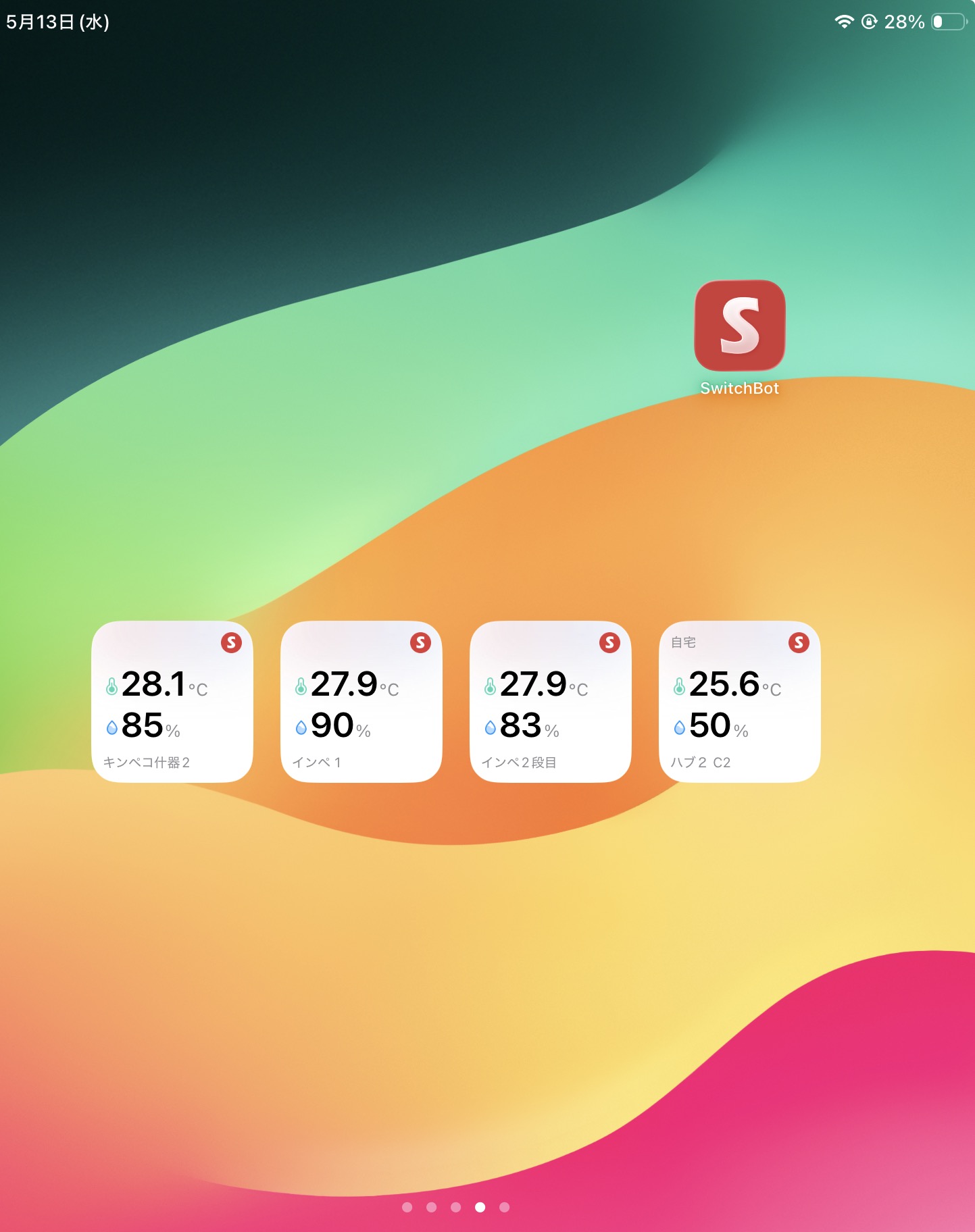
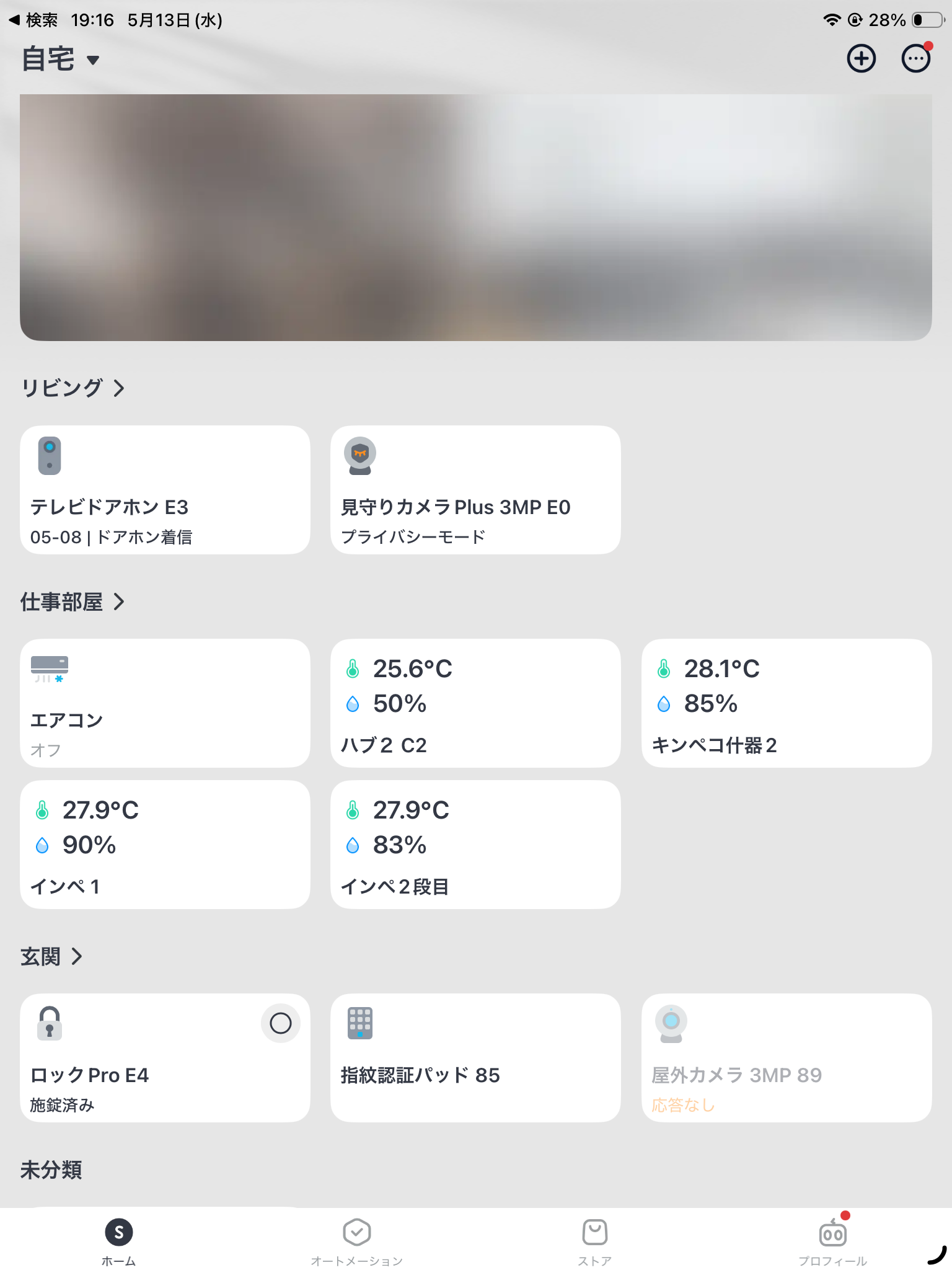
Since smart plugs are not viable, my next thought was “physical switch operation.” That’s when I focused on the SwitchBot Bot (finger robot). My current SwitchBot ecosystem is already quite extensive, including a Hub 2, a Waterproof Thermo-Hygrometer (currently used for aquarium water temperature monitoring), a Doorbell, an Indoor Camera (for observing my dog), a Security Camera, and a Door Lock Pro, so my trust in SwitchBot products is strong.
By utilizing this Bot, I can implement heater runaway prevention measures through the following mechanism:
- First, connect the aquarium heater to an “extension cord with an ON/OFF switch.”
- Next, install the SwitchBot Bot on the physical switch part of the extension cord. The Bot can then physically press the switch to toggle the power ON/OFF.
- Then, use SwitchBot’s automation feature. If the SwitchBot Waterproof Thermo-Hygrometer, which I already use for monitoring aquarium water temperature, detects, for example, “water temperature 35℃,” the Bot will automatically be set to turn the extension cord’s switch “OFF.”
This method avoids direct power control to the heater, relying instead on physical switch operation. This bypasses the risks of voltage spikes and exceeding rated capacity that were concerns with smart plugs. In the unlikely event that the heater’s built-in thermostat malfunctions and the water temperature rises abnormally, the Bot will physically cut off the power, thus preventing the aquarium from boiling.
Setup Concept: Automatic Shut-off at 35℃
SwitchBot’s automation feature is highly flexible and perfectly suited for this purpose. The specific setup concept is as follows:
- Condition: SwitchBot Waterproof Thermo-Hygrometer (installed in the aquarium) detects “water temperature 35℃ or higher”
- Action: SwitchBot Bot “turns off the extension cord switch”
With this setting, the heater’s built-in thermostat will maintain the water temperature appropriately under normal conditions. However, if the thermostat malfunctions and the water temperature reaches a dangerous level, the SwitchBot system will act as a secondary safety device. While 35℃ is a very dangerous temperature for fish, I plan to set it as a trigger to reliably cut off power before the water reaches boiling point. I am confident that this will protect the lives of my precious plecos.
Summary of Required Equipment
The main SwitchBot products required for this heater runaway prevention measure are the following three:
- SwitchBot Bot (Finger Robot): The main device that physically operates the extension cord’s switch.
- SwitchBot Hub 2: Essential for connecting the Bot and Waterproof Thermo-Hygrometer to the internet and executing automations. In my case, I already own one, so no additional purchase was needed.
- SwitchBot Waterproof Thermo-Hygrometer: A sensor that accurately monitors aquarium water temperature and detects abnormalities. I am already utilizing this for aquarium water temperature monitoring.
In addition to these, an “extension cord with an ON/OFF switch” to connect the heater is all that’s needed to build this safety system. For me, already owning several SwitchBot products, the ability to implement such robust safety measures by simply adding a Bot was very appealing.
Review Coming Soon Upon Arrival!
The SwitchBot Bot is currently on order, and I’m awaiting its arrival. As soon as it arrives, I plan to set it up immediately and write a detailed review article about its usability and actual operation.
I’m very much looking forward to seeing how much peace of mind this reliable physical switch-based safety measure will bring. This is a new step towards protecting my precious plecos from the terror of heater runaway. Please look forward to the follow-up report!
 Pochipp
Pochipp
Pochipp
Pochipp
Pochipp


コメント