I had expected a day like this would come, but I never imagined two species simultaneously at this timing. I didn’t expect to find King Tiger Pleco fry for the first time in two months, and on the very same day, also discover Imperial Zebra Pleco fry. I’m writing this article while still brimming with excitement.
- Peeking into the King Tiger Pleco Tank — Two Yellow Objects
- Peeking in, wondering ‘Is it Imperial Zebra Pleco’s turn yet?’ — Suspicious Movements
- When I directed a water current with a large pipette… white spheres floated gently
- The spawning occurred in the 60cm wide tank—Was the power outage the trigger that day?
- 60cm Wide Tank Setup
- Conclusion — The Next Challenge is Rearing Fry
Peeking into the King Tiger Pleco Tank — Two Yellow Objects
As I sat in front of the tank observing as usual, I saw two yellow objects gently moving inside the King Tiger Pleco tank. For a moment I wondered, ‘What could that be?’, but I quickly realized. They’re fry.
The last time I confirmed King Tiger Pleco fry was two months ago. I was captivated by their tiny yellow bodies back then, but since then, there had been no news, and I had been patiently waiting, hoping they would spawn again. And now, finally — they seem to have swum out from the tube (shelter).
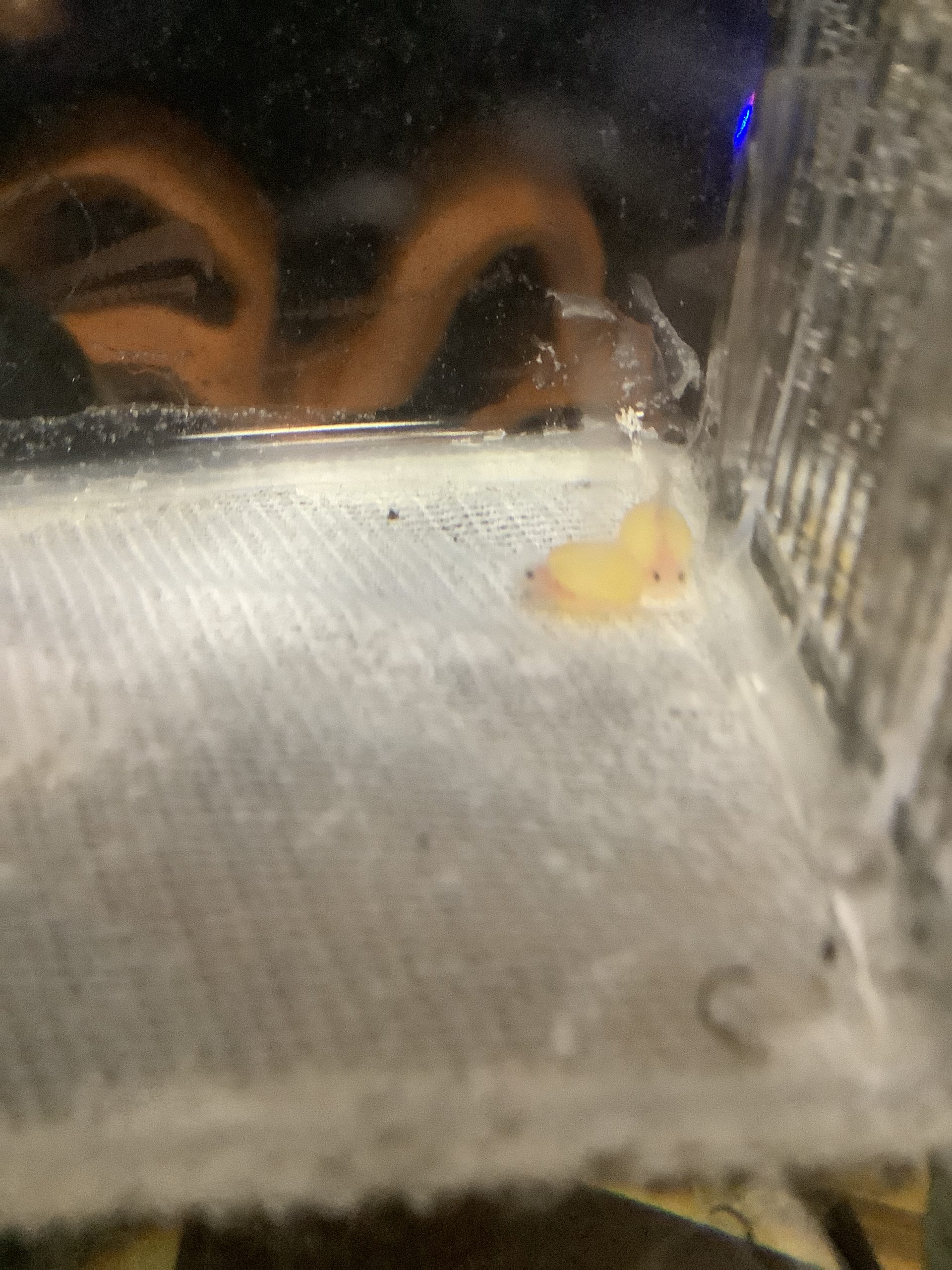
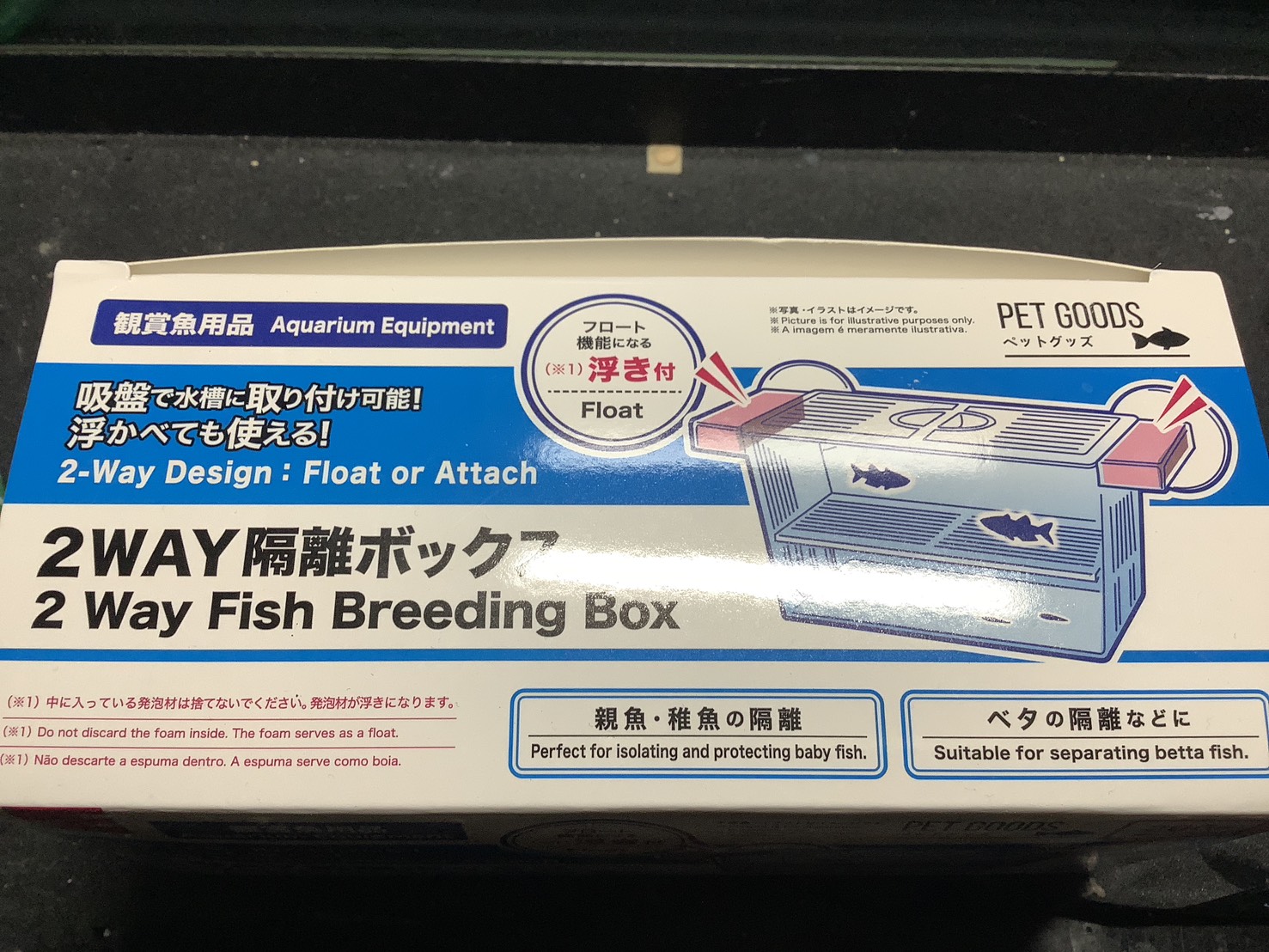
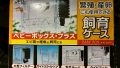
In a hurry, I took out the Daiso isolation box, gently scooped them up, and isolated them. Scooping up fry is always nerve-wracking, but somehow, both were successfully isolated. These yellow bodies are always adorable to look at.
Peeking in, wondering ‘Is it Imperial Zebra Pleco’s turn yet?’ — Suspicious Movements
Feeling elated after isolating the King Tiger Pleco fry, I suddenly decided to peek into the adjacent Imperial Zebra Pleco tank as well. I had a faint hope, thinking, ‘If the King Tiger Pleco spawned, what about the Imperial Zebra Pleco?’
Then — I saw one Imperial Zebra Pleco making strange movements inside the tank. It was pacing around in front of the shelter and nuzzling the substrate, clearly behaving differently than usual. A premonition ran through me: ‘Could this be…’
Thinking that fry might emerge like the King Tiger Pleco in a few days, I decided to clean the bottom of the tank as usual.
When I directed a water current with a large pipette… white spheres floated gently
As I continued cleaning, directing a water current with a large pipette at the feces accumulated on the substrate, something like a white, fluffy sphere emerged from near the shelter.
Wondering “What is this?”, I siphoned it up with the pipette, transferred it to the isolation tank, and upon closer inspection——
It was fry.
The long-awaited Imperial Zebra Pleco fry. Newly hatched individuals carry a yolk sac and are rounded, which made them appear like “white spheres.”
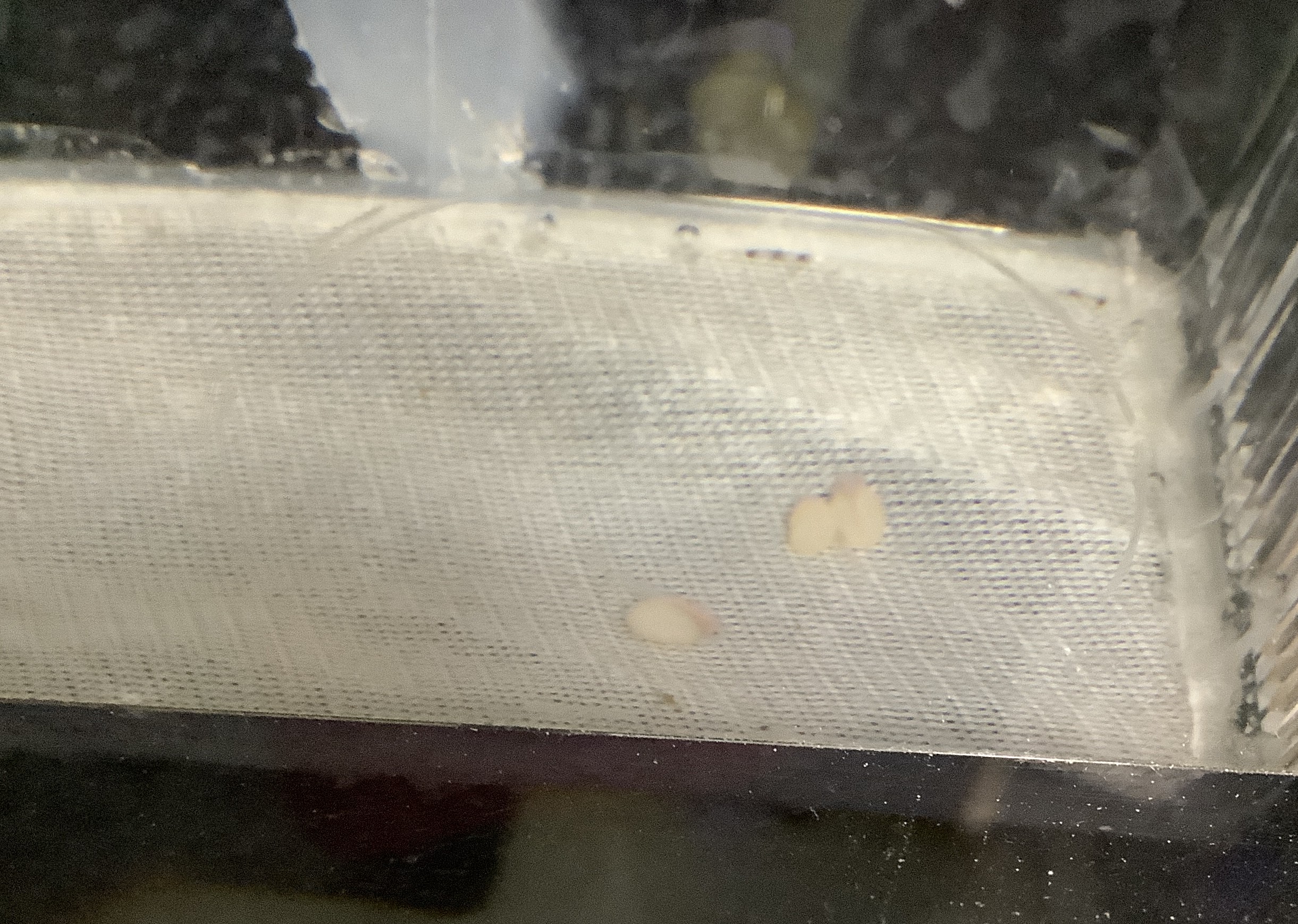
Upon carefully checking the bottom further, I discovered two more. In total, I was able to house 3 Imperial Zebra Pleco fry in the isolation tank.
Including the two King Tiger Pleco, the total number of fry rescued today is 5. However, there’s a good possibility that other fry still remain inside the tube. This time, I decided not to force them out and leave them to the male. I will quietly observe the male raising the fry inside the tube while protecting them.
The spawning occurred in the 60cm wide tank—Was the power outage the trigger that day?
The fry were discovered in the 60cm wide acrylic tank. This tank, in fact, is the one where we urgently consolidated the Imperial Zebra Plecos during the power outage incident a little while ago.
On that day, a sudden power outage occurred around 9 AM, stopping all pumps and filters. To prevent oxygen deprivation, we quickly gathered the Impe from each tank into this 60cm wide tank and managed with Awataro (now Schwatt) + a mobile battery – that’s the incident I’m referring to (Click here for the power outage article).
After that, we reorganized the setup, and now it’s unclear exactly how many individuals are in the current 60cm wide tank. I suspect that environmental changes immediately after the power outage—subtle shifts in water temperature, unusual water flow, and multiple individuals suddenly gathered in the same space—such stimuli became the trigger for spawning.
Imperial Zebra Plecos are known to be sensitive to environmental changes, and water changes or temperature fluctuations can trigger breeding. Who would have thought that power outage would ultimately promote spawning… It’s ironic, or rather, I feel the wonder of nature.
60cm Wide Tank Setup
Since we’re on the topic, I’ll record the setup of this tank where breeding was successful.
- Tank: 60cm Wide Acrylic Tank
- Filtration: Grande 600 (Kotobuki Power 8) Wet & Dry 3-stage + Sponge Filter (Kotobuki Power 8) dual configuration
- Heater: GEX Safe Cover Navi Pack 160W × 2 units
- Water Temperature Management: Constant monitoring via smartphone with SwitchBot Waterproof Thermometer-Hygrometer
- Feeding Management: After feeding, filters are temporarily paused with a SwitchBot Smart Plug to prevent uneaten food from being sucked in
- Shading: Three sides other than the front are covered with black film to block external stimuli
- Inhabitants: 3 males (10cm) + 7 females
Filtration primarily uses the Grande 600’s 3-stage wet & dry system, which is excellent for bacterial colonization. By adding a sponge filter to create a dual setup, we have prioritized water quality stability above all else. Since Imperial Zebra Plecos are sensitive to deteriorating water quality, perhaps the “overkill” level of filtration led to their breeding.
Conclusion — The Next Challenge is Rearing Fry
Securing a total of 5 fry today—2 King Tiger Pleco and 3 Imperial Zebra Plecos—was truly a joyous event. Especially since breeding Imperial Zebra Plecos has been a long-standing goal, my emotions are particularly deep.
However, just because they’ve been born doesn’t mean we can rest easy. Fry are extremely delicate, constantly facing risks such as deteriorating water quality, lack of oxygen, and predation. The real challenge begins now.
Going forward, we plan to regularly upload updates on the fry’s growth. We would be delighted if you continue to support us.
コメント