Days have passed since I started raising the King Tiger Pleco and Imperial Zebra Pleco fry, and their yolk sacs have become quite small. They are almost ready to eat on their own. When it comes to the first food for fry, it’s brine shrimp (Artemia) – to prepare for this, I decided to first set up a separate environment, so I purchased a **Nichido Baby Box Plus**.
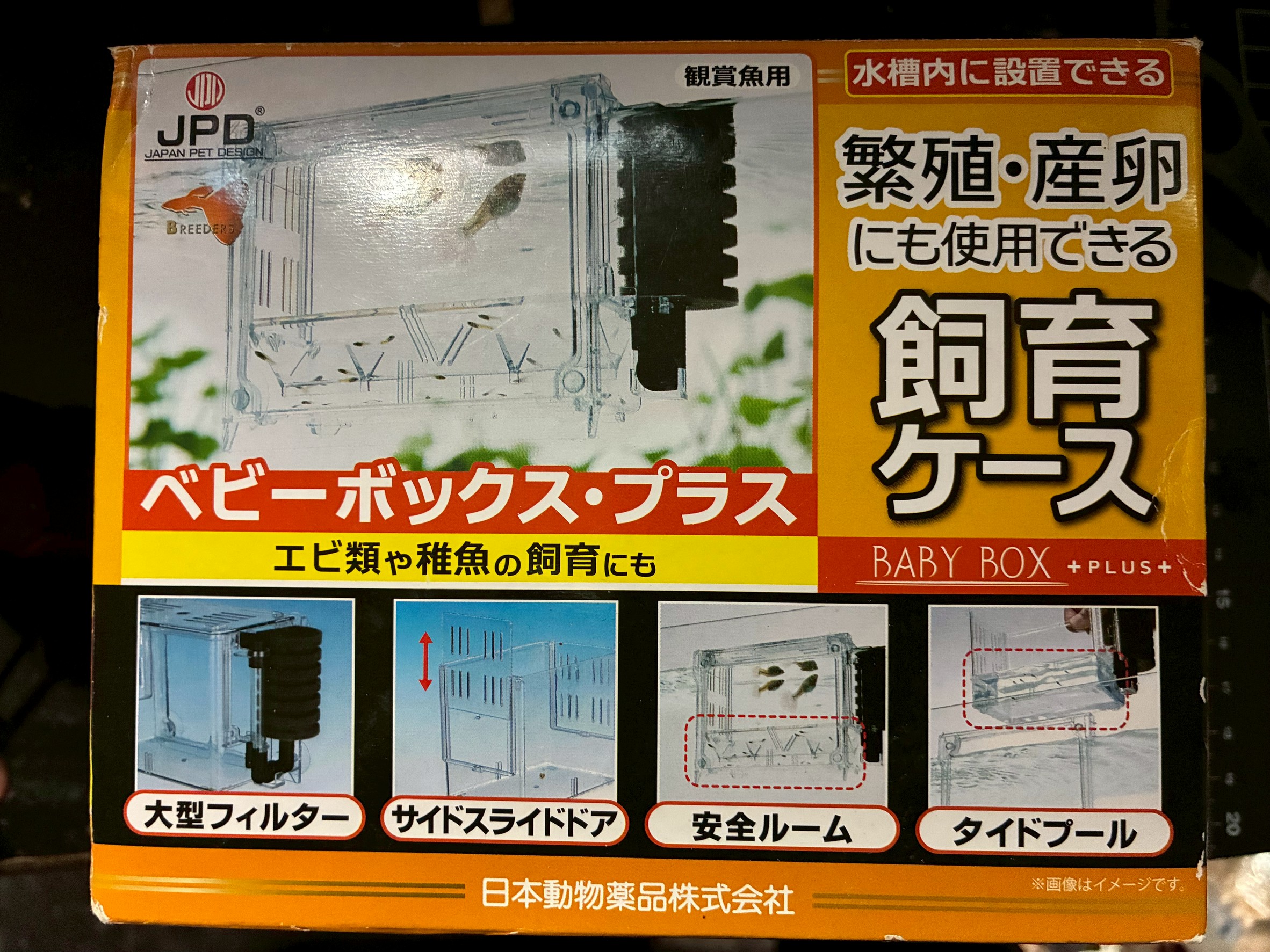
What is the Baby Box Plus?
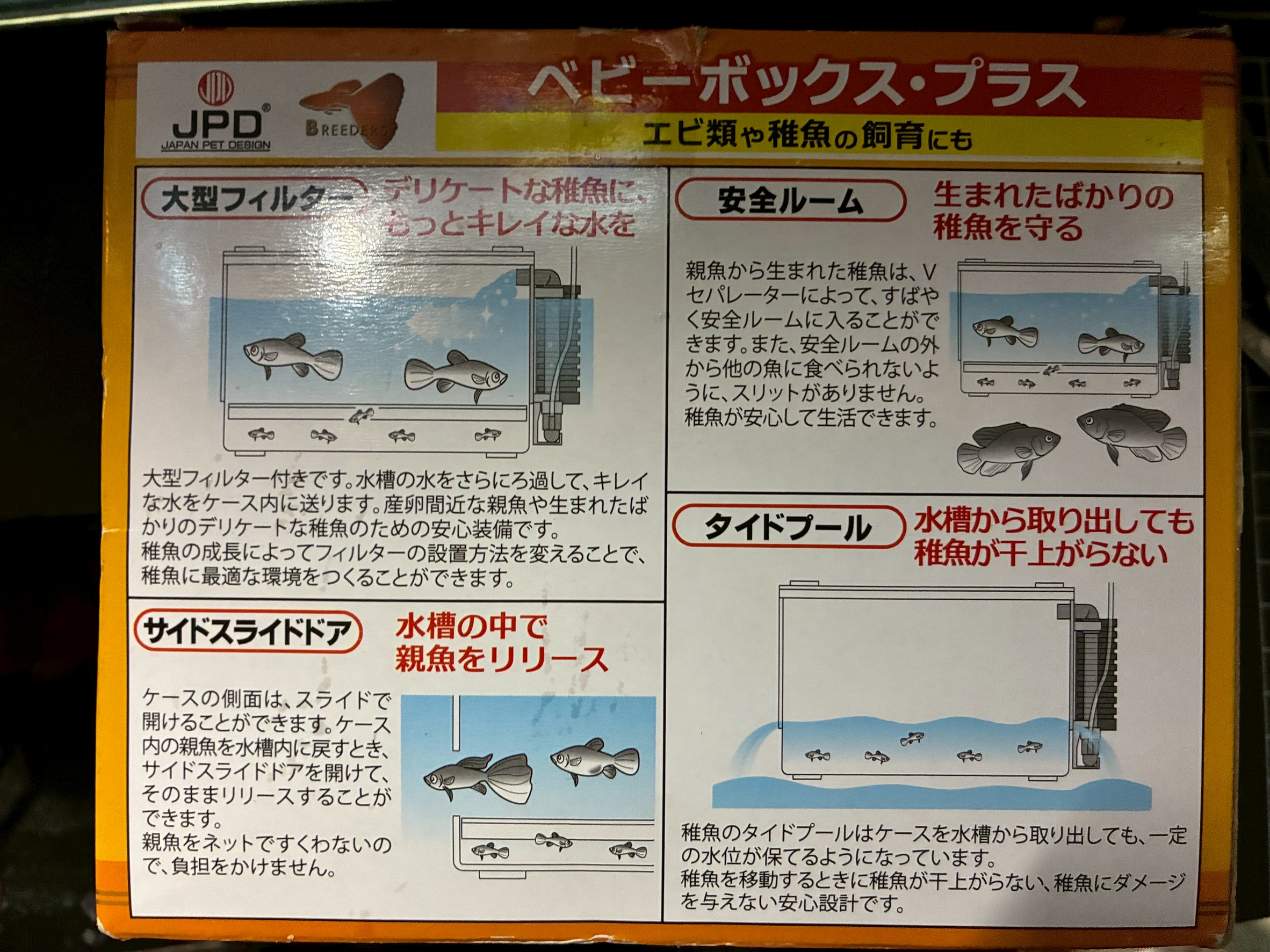
It is a spawning and isolation box sold by Japan Pet Products (Nichido). It’s a type that hangs inside the aquarium, and its characteristic feature is that while physically separating the parent fish and fry, the water quality remains stable because the main tank water circulates through it.
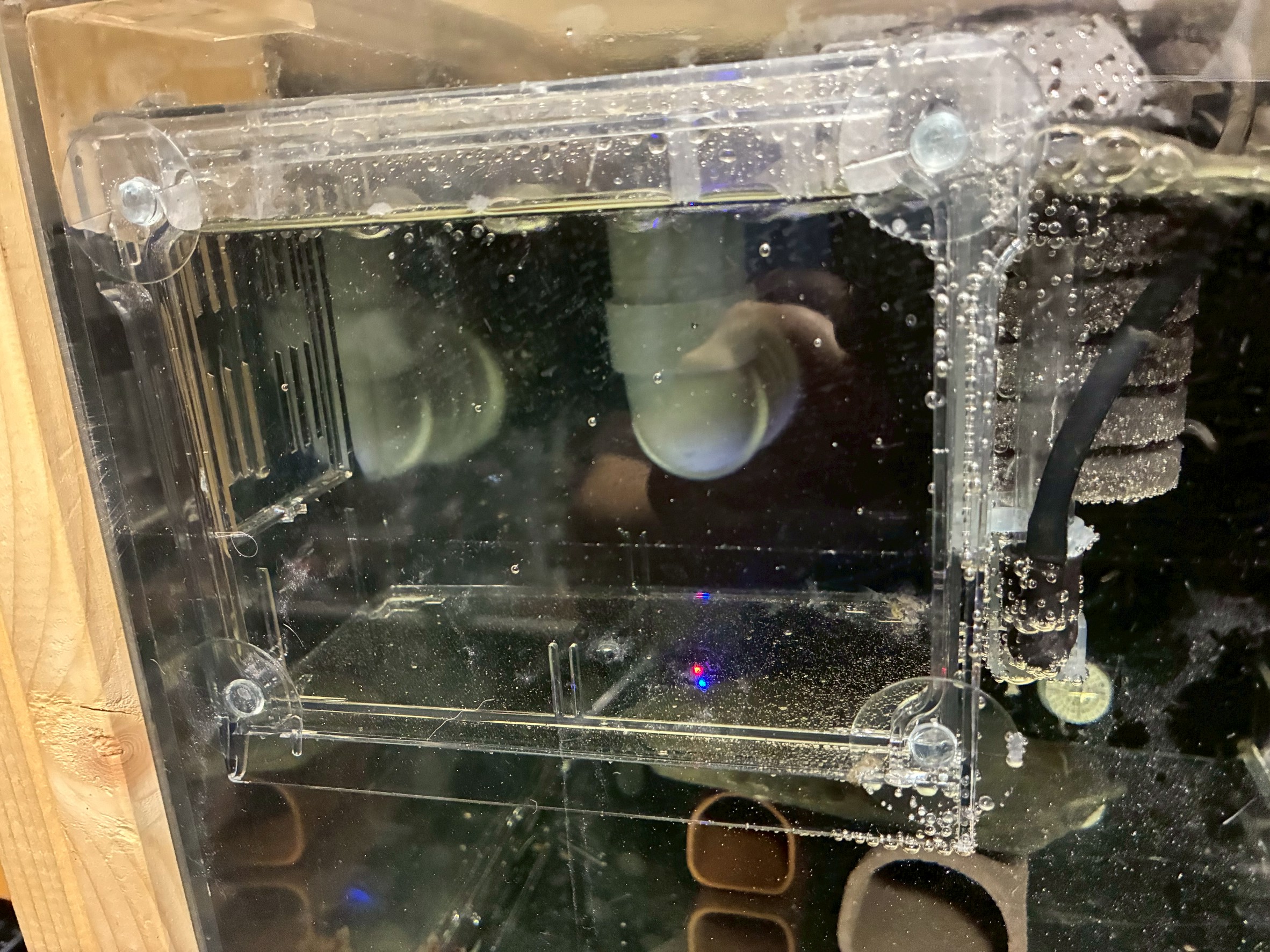
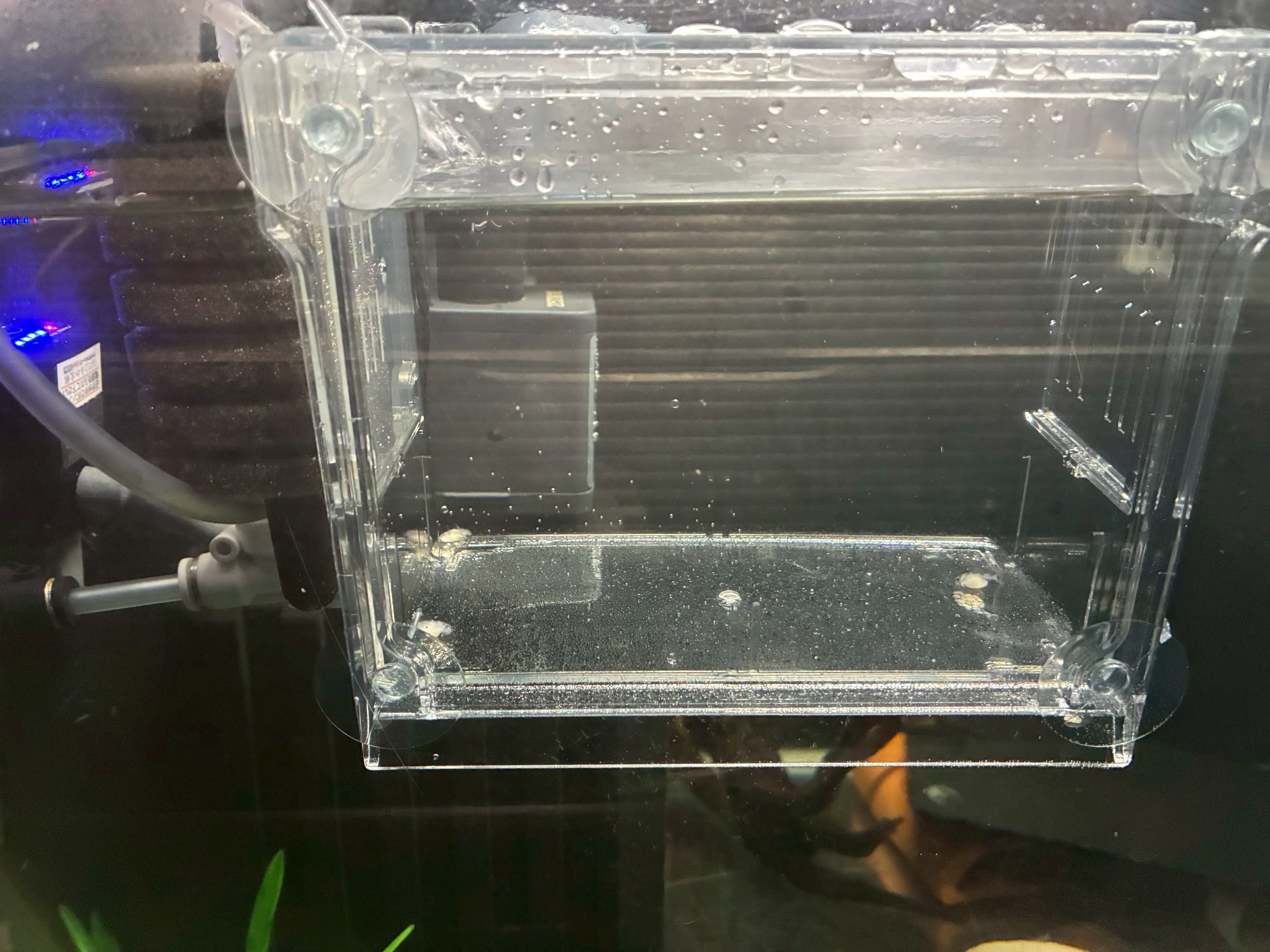
Unlike regular isolation boxes, the biggest feature of the **”Plus” is its bottom structure**. It’s designed so that tiny foods like brine shrimp don’t flow out from the sides but instead sink and remain at the bottom. Since the food stays until the fry finish eating it, there is no wasted food during feeding.
- Type: Hang-on-inside-aquarium spawning/isolation box
- Manufacturer: Japan Pet Products (Nichido)
- Features: Bottom structure prevents brine shrimp from escaping • Main tank water circulation for stable water quality • Can be divided into a spawning box and a fry rearing box with a partition plate
- Compatible Fish Species: For rearing fry of all small fish, such as Guppies, Medaka, and Plecos
Although it is known as a product for Guppies and Medaka
Ordered More Immediately After Trying It
After actually using it, I found it was truly excellent.
When I fed brine shrimp in the isolation case I used before, the tiny shrimp kept escaping through the side slits, making it questionable whether the fry were actually eating them. Even if the fry were opening and closing their mouths, it was meaningless if the crucial food simply flowed away.
Since switching to the Baby Box Plus, when I drop brine shrimp with a dropper, they sink firmly to the bottom and remain there. I can now clearly observe the fry coming down to the bottom and actively eating the shrimp. The sense of relief that “they are actually eating properly” is completely different.
It was so easy to use that I immediately placed an additional order. Having multiple units is very useful when the number of fry increases or when you want to manage them separately by species.
Prepare When the yolk sac Starts to Shrink
Newly hatched fry can survive for several days on the nutrition from their yolk sac, but once it starts to shrink, it’s time for them to begin feeding independently. Feeding brine shrimp without missing this timing significantly affects fry survival rates.
While it’s standard to feed brine shrimp after they hatch, it’s also important to provide small individuals that match the mouth size of the fry. Since pleco fry live near the bottom, sinking food is effective—and in that sense, the bottom design of the Baby Box Plus is very logical.
I will also be uploading updates on the fry’s condition.
In Closing
When raising fry, choosing the right equipment is surprisingly important; it’s not simply a matter of “anything that can isolate them will do.” If there’s a lot of uneaten food or food leakage, it can lead to water quality deterioration. I felt that the Baby Box Plus is a very well-thought-out product in that regard. For those looking for an isolation case for raising pleco fry, I highly recommend this item.



コメント