*This article contains affiliate links.
Building a “Smart Aquarium” to Protect Lives. An Ironclad Management System Achieved with Gadgets and DIY
In the first part, we covered the preparation of the 60cm wide acrylic aquarium body. In this middle part, we will explain in detail the peripheral equipment needed to turn this aquarium into a “safe haven exclusively for Imperial Zebra Plecos.”
There are two concepts for this distributed breeding setup: “thorough risk management” and “recreating the Xingu River, the Imperial Pleco’s homeland.” By combining gadgets and DIY, we will create an environment where Imperial Plecos can live with peace of mind.
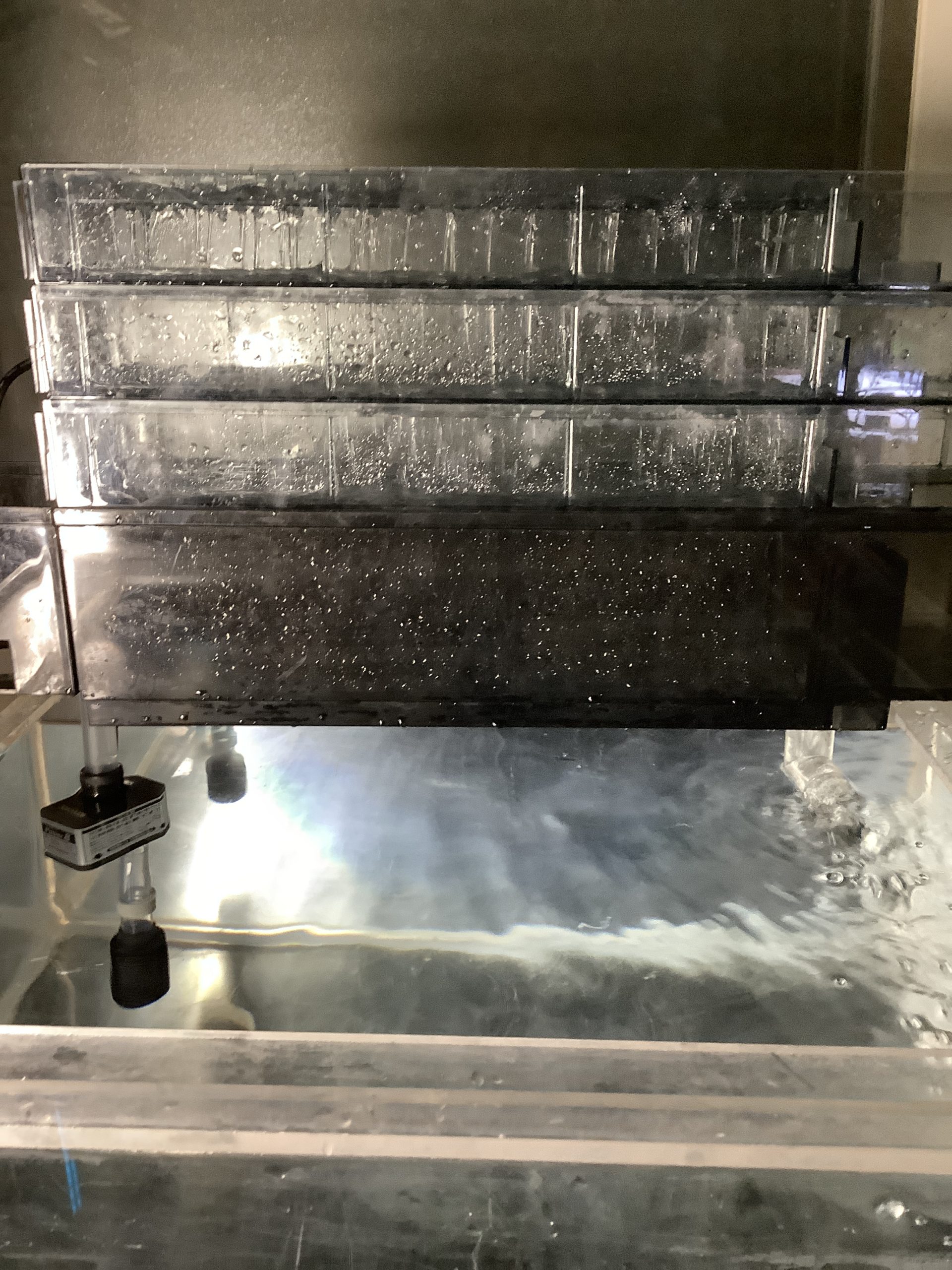
For the main filter, I chose the GEX Grande 600 (overhead filtration). Its high maintainability and, above all, its overwhelming oxygen supply capacity were the deciding factors.
Normally, it’s used in a “wet system” where the filter media is submerged in water, but this time, I will remove the pipes inside the filter tank and intentionally operate it as a “dry system.”
By letting water fall like a shower, a large amount of oxygen from the air is incorporated, creating an environment where aerobic bacteria can multiply explosively. This is expected to provide several times the biological filtration capacity of a wet system.
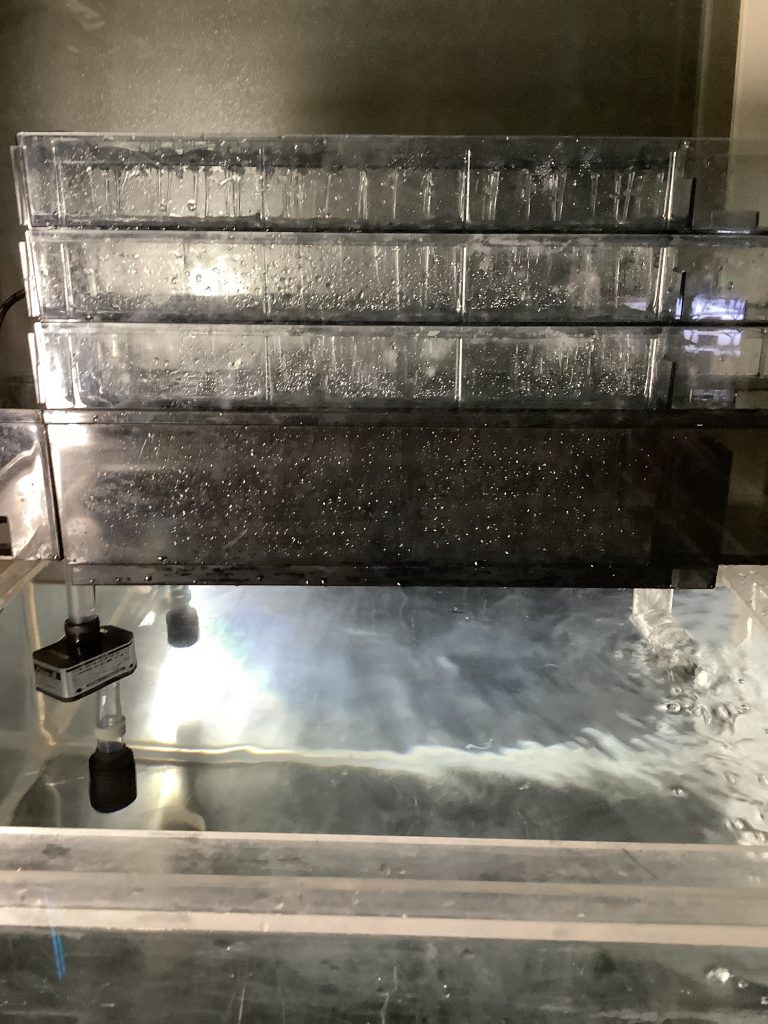
▲ Overall view of the set-up 60cm wide aquarium. The Grande 600 sits majestically on top.
The most critical aspect of keeping Imperial Zebra Plecos is water temperature management. The ideal temperature is 28-30℃. If it exceeds this, they will become unwell, and if it’s too low, their movements will become sluggish.
By installing the SwitchBot Waterproof Thermometer and Hygrometer inside the aquarium, you can check the water temperature in real-time with your smartphone even when you’re out.
Furthermore, we have set up a notification to ‘immediately notify your smartphone if the temperature drops below 25℃ or rises above 31℃‘. This technology completely eliminates the anxiety aquarists feel when they’re out, wondering ‘Is my aquarium okay?’
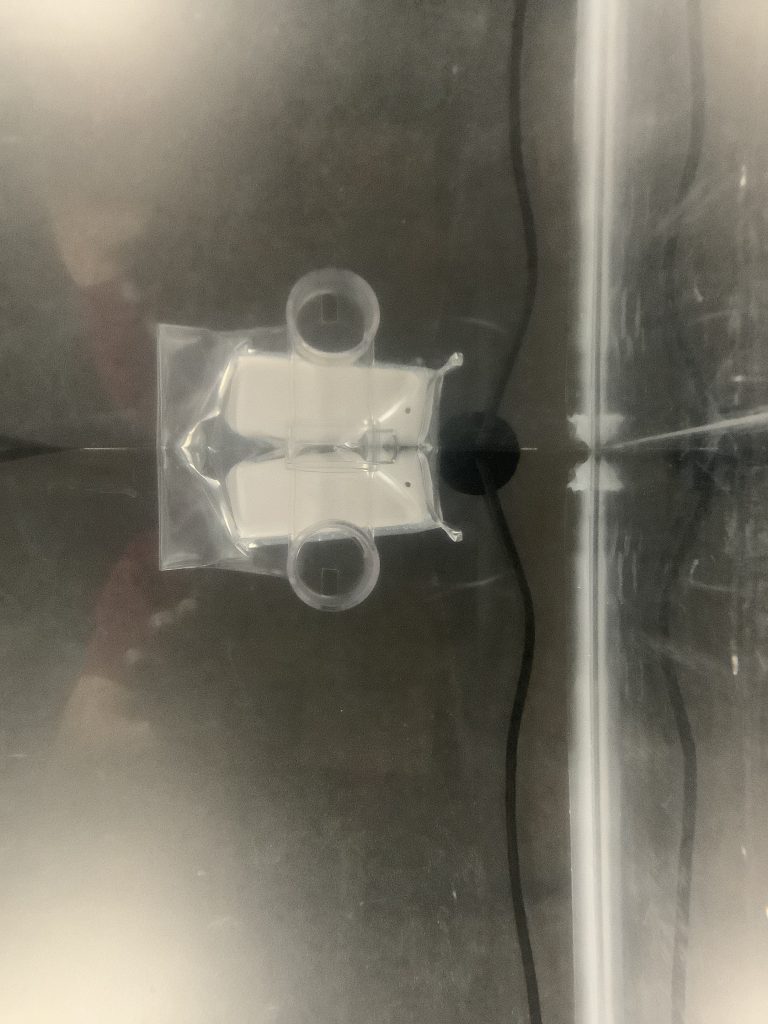
▲ SwitchBot Waterproof Thermometer and Hygrometer installed underwater. Your smartphone monitors it 24 hours a day.

Pochippu
For emperor plecos inhabiting the rapids of Brazil’s Xingu River, dissolved oxygen levels are vital for maintaining their health. Pleco keeping tends to involve high water temperatures, and as water temperature rises, the amount of oxygen in the water decreases. Oxygen deficiency can be fatal in the worst-case scenario.
Therefore, what I introduced is “Awatarou (currently the improved version, Schwatz)”, known for its micro-bubbles.
It produces ultra-fine bubbles that are on a different dimension from ordinary air stones, significantly increasing the amount of oxygen dissolved in the water. We aim for refreshing water where the Imperial Pleco can always breathe deeply.
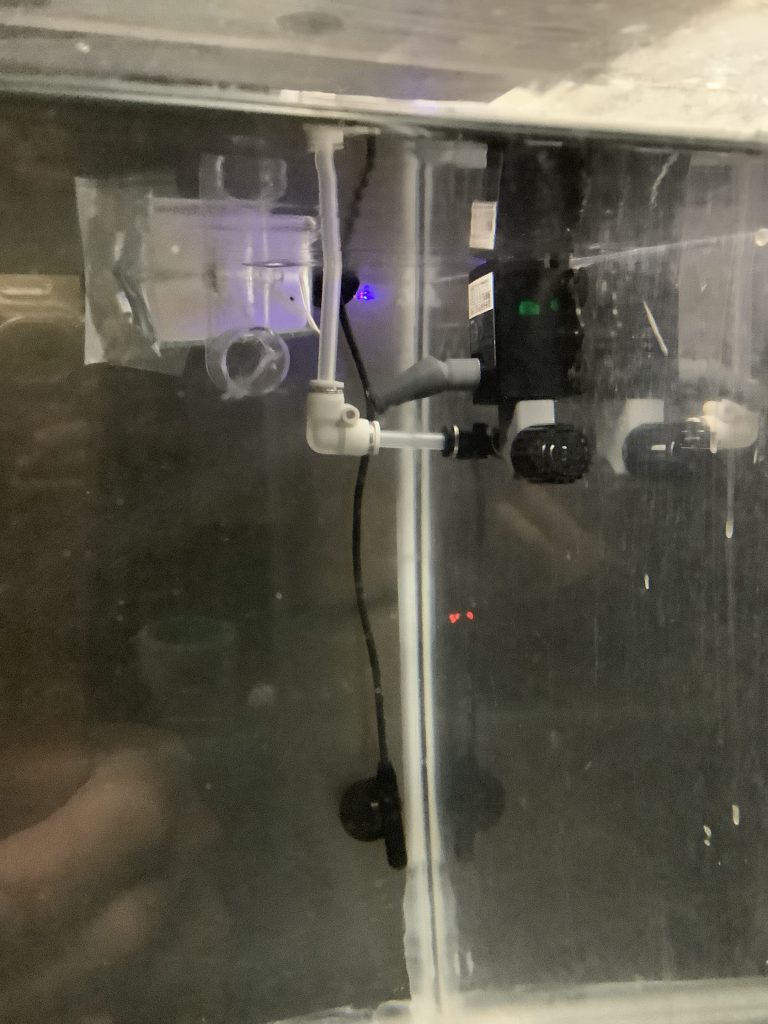
▲ Micro-bubbles from Awatarou (Schwatz). Just looking at them gives a refreshing feeling.
To protect expensive individuals, disease prevention is essential. By installing a UV sterilizer, pathogens like Aeromonas bacteria and algae spores floating in the water are inactivated by powerful ultraviolet light.
The interesting thing about this UV sterilizer is that it can create appropriate water flow within the aquarium by using the water outlet after sterilization.
Imperial Plecos, which grew up in the rapids of the Xingu River, prefer water flow. It is also effective for resolving lack of exercise and reducing stress. We are aiming for two birds with one stone: sterilization and water flow.
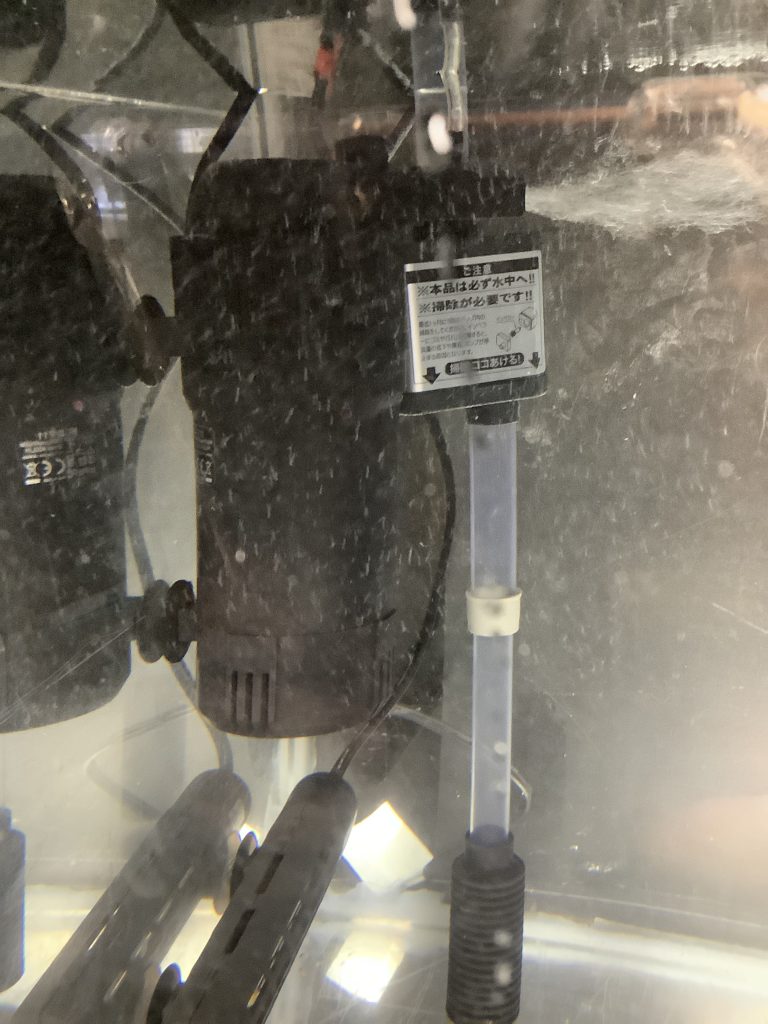
▲ UV sterilizer installed. It also creates water flow with the discharged water.
What I’m most proud of in this system is the countermeasure against heater runaway.
The scariest thing about a heater accident is when the thermostat breaks and the heating doesn’t stop, leading to a ‘boiled fish incident’. While there are ways to cut power with smart plugs, there’s also the risk of the plug itself failing.
Therefore, what I adopted was ‘physical shutdown by a SwitchBot Bot’. When the water temperature reaches 32℃, I built an automation where the SwitchBot Bot will physically press the power strip’s switch to turn it off.
A physical cutoff that doesn’t rely on software failure is truly the last line of defense.
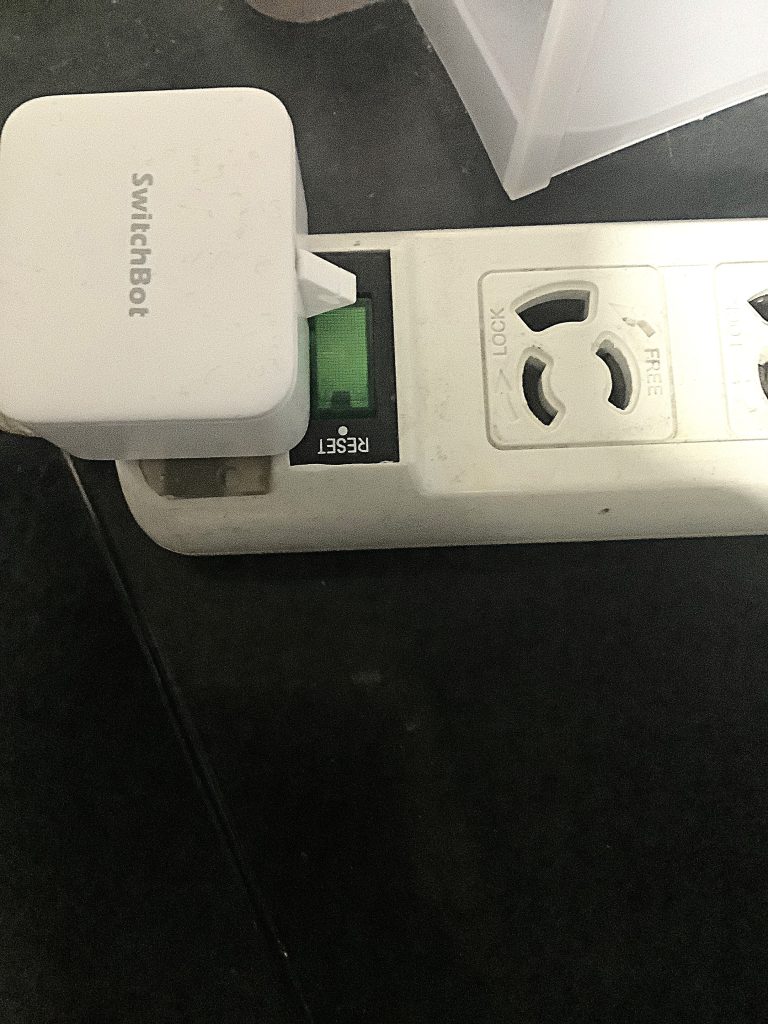
▲ How the SwitchBot Bot physically presses the power switch. This is the last line of defense.
Pochipp
Lids for 60cm wide aquariums are surprisingly scarce as commercial products, which is a problem. Dedicated products often don’t fit the size, or are made of materials that are difficult to process.
The solution this time is the idea of arranging two “A4 Clip Files” from the 100-yen shop Seria.
These fit surprisingly perfectly. Since they are made of polypropylene, they can be easily processed with a cutter, and notches for wiring and filter pipes can be made with ease.
A perfect lid is completed for a cost of 200 yen. It also prevents pleco jumping accidents, killing two birds with one stone.
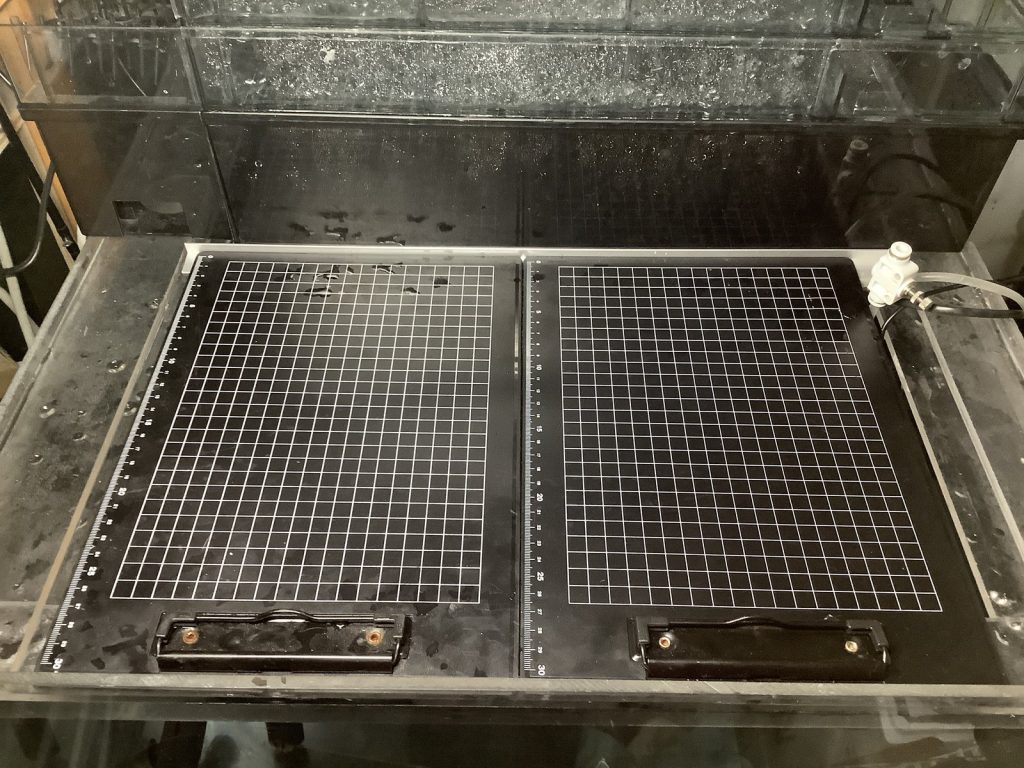
▲ The lid is completed with two Seria A4 clip files. This is a Cinderella fit!
The hardware aspect is almost complete, but two specific points remain.
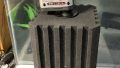
- Installation of ST TS Bio Sponge Filter XL — Doubling biological filtration with an air-driven system separate from the top filter. This maintains bacteria and oxygen even in the event of a pump failure.
- Applying a black background screen — To maximize the “pure white x jet black” striped pattern of the Imperial Zebra Pleco, the background will be black.
Little by little, but surely, the “ideal Imperial Pleco mansion” is taking shape. Look forward to the next part!
コメント