※This article contains affiliate links.
- Sudden Deaths in King Pleco Fry… My Encounter with Minerich After Consulting the Shop Owner
- Essential Items Purchased Concurrently: TDS Meter and General Hardness Test Kit
- How to Use the General Hardness Test Kit
- My Dosing Method: Practical Use in a 130L Aquarium
- Don’t Rush, Go Slowly: The Importance of Gradually Increasing Hardness
- Changes Since Starting Use: Sudden Fry Deaths Stopped
- Disadvantages and Concerns
- Summary: If Your Fry Aren’t Thriving, You Should Give It a Try
Sudden Deaths in King Pleco Fry… My Encounter with Minerich After Consulting the Shop Owner

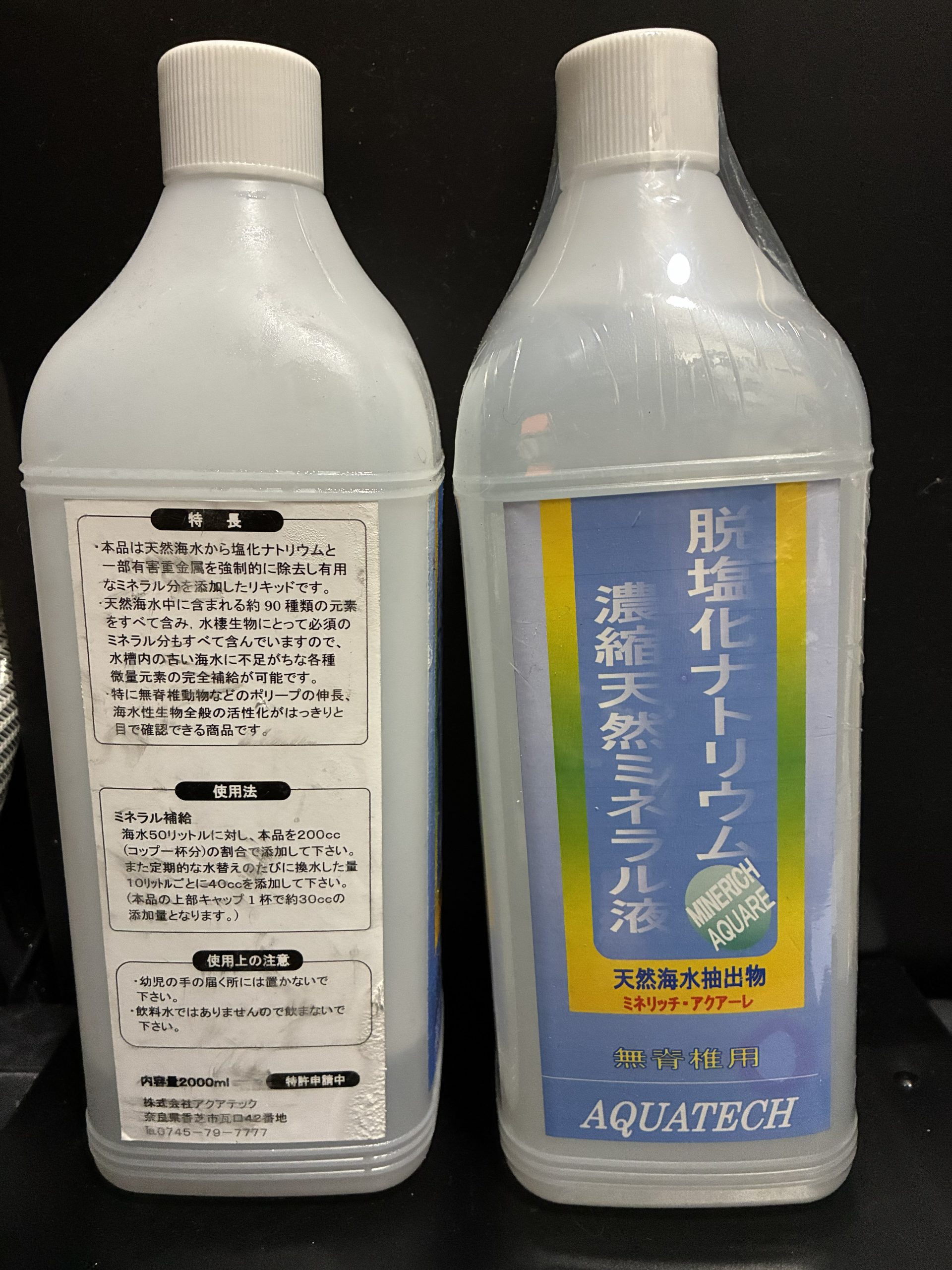
As someone captivated by the charm of plecos, especially passionate about breeding King Plecos, the growth of fry is my greatest joy. However, I once faced a sad situation where, despite having about 20 newly hatched King Pleco fry, they inexplicably started dying off one by one. Determined to do something, I consulted the owner of my favorite aquarium shop, who advised, “Perhaps your water is leaning towards being too soft.” As a countermeasure, the shop owner recommended “Minerich Acquare” manufactured by Aquatech.
Essential Items Purchased Concurrently: TDS Meter and General Hardness Test Kit

When introducing Minerich Acquare, the shop owner advised me that “it’s crucial not just to add it, but to properly measure and adjust water quality.” Therefore, along with Minerich Acquare, I simultaneously purchased the following two items for water quality management.
- TDS meter: Used to measure the total dissolved solids (TDS) in the water.
- rivera General Hardness Test Kit TH: A kit for accurately measuring the total hardness (TH) of the aquarium water.
By using these measuring instruments, I felt I could manage water quality based on numerical values rather than intuition, allowing me to add minerals with confidence. I’ve reaffirmed that visualizing water quality is extremely important for maintaining pleco health, especially when aiming for breeding.
How to Use the General Hardness Test Kit

When determining the dosage of Minerich Acquare, what I prioritized most was managing the total hardness (TH). After researching the appropriate hardness for King Plecos, my target was TH 130mg/L (approximately 7.28 dGH in German hardness). Aiming for this value, I measured water quality using the general hardness test kit and added Minerich Acquare accordingly.
- First, measure the current TH of the aquarium water using the general hardness test kit.
- I added half a capful of Minerich Acquare daily until the target TH of 130mg/L was reached.
- Once the target hardness was achieved, I recorded the TDS value at that time with the TDS meter. This served as a guideline for future water changes.
I feel that this method allowed me to perform reliable water quality adjustments based on numerical values, rather than adding blindly.
My Dosing Method: Practical Use in a 130L Aquarium

My main tank is a 130L display aquarium. The specific method for adding Minerich Acquare to this tank is as follows:
- Initial Adjustment: I added half a capful daily until the TH reached 130mg/L using the general hardness test kit.
- After Reaching Target Hardness: I measured and recorded the TDS value at the target hardness using the TDS meter.
- During Water Changes: I prepared 8L of water for the water change in a bucket and added Minerich Acquare until the TDS matched the recorded value (in my case, about half a capful was sufficient for adjustment).
- Regular Checks: Once a week, I measured the TH with the general hardness test kit and made minor adjustments as needed.
By using the TDS meter in conjunction, I felt I could maintain stable water quality while saving the effort of using the general hardness test kit with every water change.
Don’t Rush, Go Slowly: The Importance of Gradually Increasing Hardness

When adjusting water quality, what I was most careful about was “avoiding sudden changes.” For plecos, especially delicate fry, abrupt changes in water quality can cause significant stress and lead to health problems.
- I added Minerich Acquare in small amounts daily, gradually increasing the hardness.
- During water changes, instead of pouring the hardness-adjusted new water directly into the tank, I slowly poured it in using a tube, as if acclimating the water over time.
I feel that this “don’t rush, go slowly” approach minimized the burden on the fry and helped them adapt to the new water quality. I’ve once again realized that in pleco keeping, it’s crucial to always remember to be gentle with the living creatures.
Changes Since Starting Use: Sudden Fry Deaths Stopped

Since I started using Minerich Acquare, there have been visible changes in my aquarium. The most surprising thing was that the sporadic deaths of King Pleco fry, which had been a persistent problem, seemed to stop completely. Before its introduction, I was losing fry one after another from a batch of 20, but since starting Minerich Acquare and water quality management, I feel that the fry have begun to grow stably.
※However, since I also started using “Schwatch (formerly Awataro)” at the same time, I cannot definitively conclude whether the effect is due to one product, or a synergistic effect of both. Nevertheless, I strongly believe that the stabilized water quality created a better environment for the fry.
Subsequently, my King Plecos spawned two more times, and I was able to raise a total of about 30 fry. Only 3 of them were lost. I feel that the fry survival rate has clearly improved compared to before. I was truly moved by these results.
Disadvantages and Concerns
After actually using Minerich Acquare, I personally didn’t feel any particular disadvantages or concerns.
- Price: I don’t feel it’s a particularly expensive product. Considering its effect on improving fry survival rates, I would even say it offers good cost performance.
- Water Quality: The water didn’t become stagnant, and I didn’t notice any impact on clarity.
If I had to mention something, it might be the slight initial investment and effort required to use it in conjunction with a TDS meter and general hardness test kit. However, I consider these essential for accurate water quality management, so I don’t see them as disadvantages.
Summary: If Your Fry Aren’t Thriving, You Should Give It a Try
Minerich Acquare, which I introduced out of desperation when struggling with the sporadic deaths of King Pleco fry. In my case, since I was also using other products at the same time, I cannot definitively conclude the effect of Minerich Acquare alone. However, since I started hardness adjustment with Minerich Acquare and careful water quality management using a TDS meter and general hardness test kit, I feel that the fry survival rate has visibly improved.
If you are also facing similar challenges in raising pleco fry, why not give Minerich Acquare a try? Combined with proper water quality management, it might just lead to excellent results.
▼Purchase Minerich Acquare here
[購入リンクを挿入]
🛒 Purchase Minerich Acquare 2L

※Includes Amazon Associate and Rakuten Affiliate links
 ポチップ
ポチップ
コメント