
Today, I rearranged my Imperial Zebra Plecos. Until now, they were somewhat haphazardly distributed across various tanks, but this time, I reconfigured their setup with a clear focus on ‘aiming for breeding.’ As a result, breeding pairs (or groups with multiple females) are now established in all three aquatic systems, and I feel that a full-fledged breeding system is finally in place.
Reasons for Deciding on the Rearrangement
The previous arrangement largely involved keeping individuals separately in different tanks, prioritizing their health management, and from the perspective of ‘sex ratios optimized for breeding,’ it wasn’t well-organized. At this point, with an increasing number of tanks, I re-evaluated the entire setup, and realized that since I have multiple tanks, I should arrange them to aim for breeding in each one.
For breeding Imperial Zebra Plecos, isolating aquatic systems is also important. By keeping them in separate aquatic systems, subtle differences in water quality and environmental stimuli vary for each individual, increasing the likelihood that conditions will become optimal for spawning in one of the tanks first. Rather than gathering all of them into a single aquatic system, I believe that distributing them across multiple aquatic systems leads to risk diversification and an increase in breeding opportunities.
Current Arrangement: 3 Aquatic Systems, 4 Groups
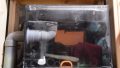
Bottom Right Cabinet: 2 Males (8cm) + 2 Females (Nagisa Lineage)
In the bottom right section of the cabinet, I placed a total of 4 individuals: 2 males and 2 females. The females are individuals from the Nagisa Nanashi lineage, and Imperial Zebra Plecos of this lineage are known for their striking white and black contrast, so there are high hopes for the offspring they will produce. Both males are still relatively small, around 8cm, but they should be mature, so I will monitor their condition as the situation develops. A configuration of 2 males and 2 females might lead to some competition, but I plan to provide multiple shelters to alleviate territorial disputes.
Top Left Cabinet: 1 Male (9cm) + 2 Females
The top left section of the cabinet consists of 1 male and 2 females. The male is 9cm, a relatively solid size within this group, forming a harem-like setup. A configuration with multiple females per male is said to encourage the male to engage in breeding behavior more actively, and I believe it’s an ideal ratio for inducing spawning. I have the highest hopes for this tank.
New Overflow Tank: 1 Male (10cm) + 1 Female (6cm)
Initially, I placed one male (10cm) and two females (6cm) in the side-flow overflow tank that I set up recently. However, the females were not compatible, and I observed one bullying the other, so I promptly moved one female to the 60cm wide tank. Currently, this tank is settled with a pair consisting of one male and one female. The male is the largest individual in this tank at 10cm and has a strong presence. The female is still small at 6cm, so it might take a bit more time for breeding, but I hope they will slowly build their relationship as a pair. Since it’s an overflow system, stable water quality can be expected, and I anticipate it will maintain good conditions long-term.
60cm Wide: 1 Male (10cm) + 4 Females
The 60cm wide acrylic tank, which has been running for some time, originally housed one male (10cm) and three females. However, I took in the female (6cm) who was being bullied in the new overflow tank, resulting in a setup of one male and four females. This is the largest group among the current arrangements. The male is a robust 10cm individual, and there are also females with full bellies, so I secretly hope this group will be the first to spawn. I also believe that the newly added female will be more settled in an environment with multiple females. The 60cm wide tank boasts a comprehensive filtration system with a Grande 600 3-stage wet & dry filter plus a sponge filter, ensuring stable water quality, making it an ideal stage for breeding.
The Significance of Dividing into 3 Water Systems
What I focused on with this rearrangement was isolating the water systems to “distribute the breeding chances.” Imperial Zebra Plecos only begin breeding when various factors such as water temperature, water quality, and light environment align. If all individuals are kept in the same water system, “everyone will be under the same conditions,” and if those conditions aren’t met, it leads to a complete failure (breeding failure). However, by dividing them into three separate water systems, the possibility arises that conditions might align in just one of the tanks, leading to spawning there first.
Furthermore, having separate water systems offers a risk management benefit: if disease or water quality deterioration occurs in one tank, it is less likely to spread to other water systems. Given that I am keeping this many Imperial Zebra Plecos, distributed management to avoid the risk of total loss is an extremely important concept.
What I Keep in Mind When Aiming for Breeding
While spawning won’t necessarily begin immediately after the rearrangement, I’ll summarize a few things I consistently keep in mind for breeding.
- Water Temperature Stability: Constantly monitor the water temperature of each tank with a smartphone using a SwitchBot Waterproof Thermo-Hygrometer. Preventing sudden changes in water temperature is the top priority.
- Daily Cleaning: Daily removal of feces and uneaten food from the bottom using a pipette and a Pro-Hose. Stable water quality is a major prerequisite for breeding behavior.
- Shading: For Imperial Zebra Plecos, which are sensitive to external views and light, three sides other than the front are covered with black film. It is especially important not to stimulate them during the breeding season.
- Securing Shelters: Multiple shelters and clay pipes are installed in each tank, creating a calm place for each individual. The male’s behavior of inviting the female into a shelter he likes as a nesting site triggers spawning.
- Feeding Management: After feeding, the filter is temporarily stopped with a SwitchBot Smart Plug to prevent uneaten food from being sucked in, allowing them to eat sufficiently.
In Conclusion
With today’s rearrangement, my Imperial Zebra Plecos have been organized into 3 water systems and 4 groups, creating a setup where breeding can be aimed for in all tanks. The total scale is 5 males and 9 females, and I am looking forward to seeing activity emerge in one of the tanks first.
I am particularly focused on the tanks containing females of the Nagisa lineage and females with full bellies. I find myself observing them every time I sit in front of the tanks, but I know it’s important to wait patiently without rushing. Imperial Zebra Plecos won’t move if you rush them. All that’s left is to prepare the environment and then trust them.

コメント